How to Close the Year Without Carrying the Emotional Weight Into the New Year
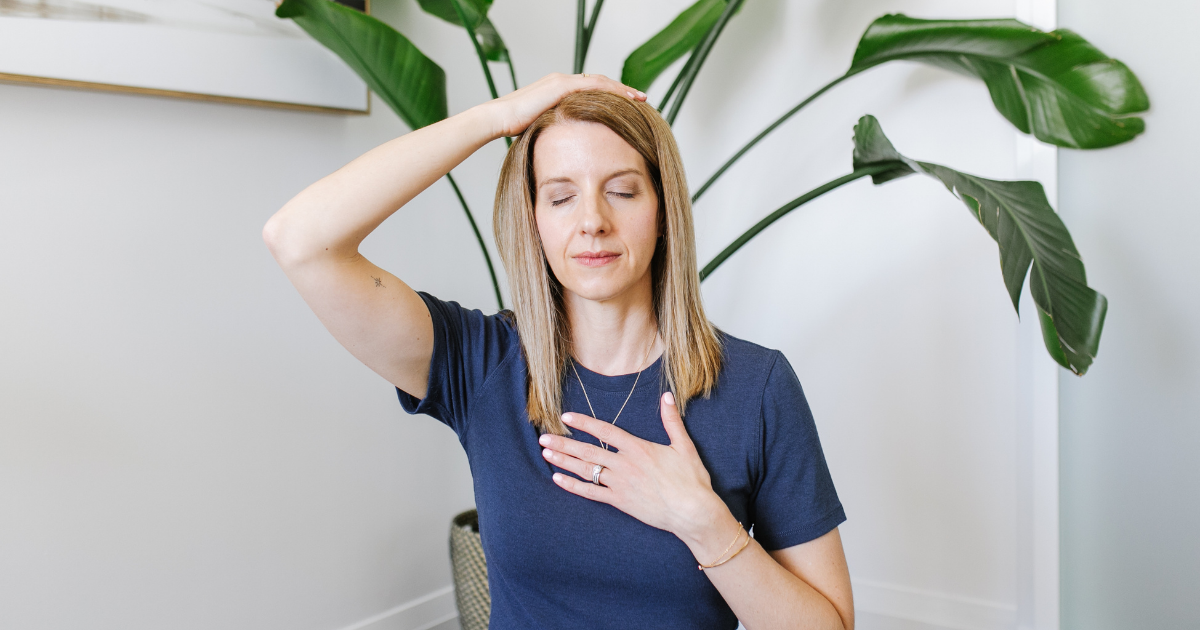
A year-end reflection for mental health professionals to release what's accumulated and step into the new year lighter.
There’s a moment every December, you might recognize it, when the pace finally slows enough for everything you’ve carried to catch up with you. Maybe it arrives in the quiet after your last client of the year walks out the door. Maybe it’s the first morning of your holiday break, when you’re holding a warm mug of coffee and your body realizes, "Oh… we’re stopping now."
And suddenly, you can feel the weight of your work… not all at once, but there is a realization that you've been carrying more than you realized.
Because this work is human, intimate, and energetically porous. Even with skill and experience, some things still cling to us simply because we care.
Every clinician and every helper, even the most seasoned, the most attuned, the most “resourced” needs intentional space to release what builds up over a year.
You need rituals that help you empty out.
Reflection that helps you process.
Practices that remind the body and nervous system that the year is complete and you are allowed to soften again.
So let this blog be your gentle invitation into that space and a moment to recognize the invisible emotional weight you’ve carried, to honour the beautiful but very real labour of this work, and to step into the new year just a little lighter, more grounded, and more fully yourself.
You’ve Carried More Than You Realize… And It Makes Sense
If you’re reading this, chances are you spend your days sitting with people in some of their darkest moments. You support nervous systems in distress, hold stories that don’t always have resolution, and stay attuned even when your own energy is stretched thin.
We know this work can be profoundly meaningful, but it also asks for continuous emotional output.
And here’s something we rarely acknowledge:
Most of us in helping professions end the year exhausted and don’t realize it’s because we’ve been absorbing and focusing on others all year long.
And humans who do ongoing emotional labour need permission to pause, acknowledge, and release.
My Moment of Recognition: When I Realized I Was Carrying Too Much
I remember the exact moment I realized I had crossed a boundary, the moment when someone else’s wellbeing had quietly taken priority over my own rest.
At the time, I was working as an intensive outpatient therapist, heading into what I hoped would finally be some restorative time off. I was standing in my kitchen on the first morning of my holiday break, officially on PTO, trying to ease my way into the feeling of slowing down.
But before I allowed myself to relax, I felt the familiar pull to “just check” my work messages — you know, just in case. And out of my sense of urgency, because at the time everything felt like a crisis, I returned a client’s call.
In my kitchen.
On my time.
On a day that was supposed to be mine.
The whole time I was on the phone, a pit sat heavy in my stomach. Something in me knew: This isn’t okay. I can’t normalize this. I can’t keep sacrificing my own values to meet the needs of work.
That call was a wake-up moment. I could feel how porous my boundaries had become, how wide-open my energy still was to what I had left behind at the office. And in that instant, I realized I was on a slippery slope — one where I kept giving after I stepped away, and long after my body needed me to stop.
It became clear that I couldn’t keep doing this (and honestly, I didn’t want to). I needed a way to close out my workday so I could actually return to myself.
That year, I learned the power of a ritualized closing.
The ritual that grounded me most was beautifully simple:
Closing and locking my office door with intention.
Every evening, I would place my hand on the doorknob, take a slow breath, and as I pulled the door shut behind me, I’d exhale — letting go of everything I didn’t want to carry home. And when I turned the key and heard the click of the lock, it became a cue to my nervous system:
The work stays here.
It didn’t change everything overnight, but it created a clear energetic boundary — a separation between my work role and my life, between what was mine to hold and what needed to stay behind.
And that ritual is at the heart of this year-end reflection: recognizing what you’ve been carrying, honouring the weight of it, and giving yourself permission to finally put some of it down.
A Guided Reflection for Mental Health Professionals: What have you carried this year?
Take this slowly and maybe with a warm drink or a quiet corner. Let this be a moment where you receive some presence. These reflections are meant to help you recognize what you absorbed, what stretched you, what shaped you, and what you’re finally ready to set down.
Take a breath. Get comfortable. And when you’re ready, explore these gentle reflections:
Where did you carry responsibility that wasn’t fully yours?
What emotional weight settled into your body this year?
What stories, worries, or concerns don’t belong to you moving forward?
Where did you show deep presence or attunement?
What would feeling lighter and more supported look like for you in the year ahead?
Rituals to Help You Release, Reset, and Step Forward Lighter
Reflection helps the mind understand what happened.
Ritual helps the body finally let go.
This somatic release isn’t dramatic or elaborate; it’s a gentle invitation back into yourself, a signal to your nervous system that it no longer has to hold everything it once did.
Here is a somatic grounding ritual to bring closure to the year:
Find a space where your body can soften.
Begin with a slow, intentional shake-out just thirty seconds of loosening your arms, legs, and shoulders, inviting your body to “unhook” from what it doesn’t need anymore.
Let your breath flow, drawing in a deep inhale and releasing it with a long, deliberate exhale.
Slowly lower yourself onto the floor lying on your back, placing a hand on your heart or belly, and let gravity hold you for a moment.
Stretch in whatever direction your body asks for, lingering where it feels good.
And finally, offer yourself one deep sigh — the kind that drops your shoulders without you trying.
These are not small gestures. They are powerful, quiet rituals that help your body release what it has been holding, so you can step into the new year with greater spaciousness, softness, and ease.
As You Step Into the New Year…
You deserve to enter the next season feeling clear, grounded, and supported and not weighed down by 12 months of emotional residue.
If you want deeper support cultivating these skills, from emotional release to nervous system capacity, there are two ways to work with me:
🌿 The Groundwork — foundational nervous system & inner support practices.
🌿 The Grounded Clinician — a deeper container to help you expand your capacity, stay resourced, and sustain yourself in this field.
You don’t have to do this alone.
And you don’t have to carry all of this into the new year.
Always,
Betsy
Get the support every helper deserves.
Receive my monthly email for practical nervous system tools and supportive reflections so you can stay well while you help others.
You're in.
Support is on its way, and you don't have to do this work alone.